How Legal Aid Differs from Legal Consultation

Legal services are essential for ensuring access to justice, but not all legal help is the same. Two common types of legal support are legal aid and legal consultation. While both aim to help individuals with legal issues, they differ significantly in terms of purpose, accessibility, and scope of service. Understanding these differences can help people choose the right kind of support for their situation.

1. Definition and Purpose

  • Legal Aid
    Legal aid is a public or non-profit service designed to help individuals who cannot afford to hire a lawyer. It is typically provided for serious legal issues such as criminal defense, domestic violence, housing evictions, or child custody cases. The main goal is to ensure that everyone, regardless of income, has access to legal representation.

  • Legal Consultation
    A legal consultation refers to a professional meeting with a lawyer to receive advice or information about a legal issue. This service may be free or paid and is often used by individuals who are exploring their legal options or need guidance on specific questions.

2. Eligibility and Access

    • Legal Aid
      Access to legal aid is usually limited to low-income individuals who meet strict financial and legal criteria. Applicants may need to provide income statements, proof of residency, or documentation of the legal issue. Legal aid programs are often run by government agencies or legal non-profits.

    • Legal Consultation
      Legal consultations are available to anyone, regardless of income. Many private law firms offer an initial free consultation, especially in areas like personal injury, immigration, or business law. More detailed or ongoing advice usually requires payment.

3. Scope of Service

    • Legal Aid
      Legal aid can involve full representation in court, legal document preparation, and assistance throughout an entire legal case. However, due to limited funding, not all applicants are guaranteed help, and legal aid programs often focus on high-priority cases.

    • Legal Consultation
      A consultation typically lasts 30 to 60 minutes and provides general advice or direction. It may not involve court representation or long-term assistance unless the client chooses to hire the lawyer afterward.

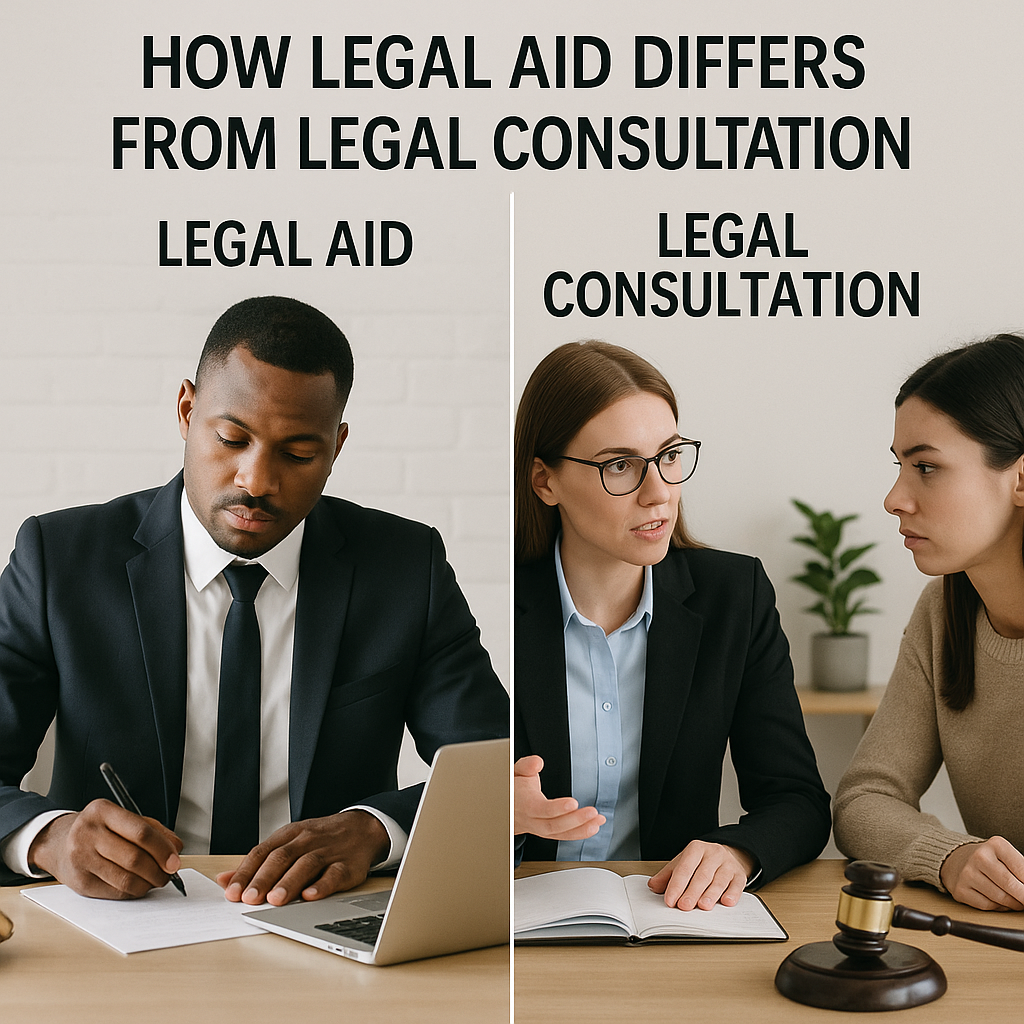
4. Examples of Use

    • Legal Aid

      • A low-income tenant facing eviction receives free legal representation in court.

      • A domestic violence survivor obtains help filing a protection order.

    • Legal Consultation

      • A small business owner meets with a lawyer to discuss contract terms.

      • A person consults a lawyer about the risks of filing for bankruptcy.

BANGKOK LEGAL CONSULTING CO.,LTD.

How Legal Aid Differs from Legal Consultation

Both legal aid and legal consultation play important roles in the legal system, but they serve different needs. Legal aid ensures access to justice for those who cannot afford legal services, while legal consultations provide tailored advice to anyone seeking legal guidance. Knowing when to use each can lead to better decisions and outcomes when dealing with legal matters.