Why Lawyers Are Still Essential in the Age of AI

In recent years, artificial intelligence (AI) has made remarkable strides across various industries, reshaping how tasks are performed and automating many functions once thought to be exclusively human. The legal field is no exception. AI-powered tools now assist with legal research, contract review, case prediction, and even document drafting. Despite these advances, lawyers remain indispensable. Here’s why:

Complex Human Judgment Cannot Be Replaced

AI excels at processing large volumes of data and identifying patterns, but the practice of law involves nuanced judgment that transcends raw information. Lawyers interpret laws within specific contexts, weigh competing interests, and make strategic decisions that require empathy, ethical considerations, and cultural understanding—areas where AI still falls short.


Ethics and Accountability

Legal professionals are bound by strict ethical rules and professional responsibility standards. They must maintain client confidentiality, avoid conflicts of interest, and uphold justice. While AI tools can aid in decision-making, the responsibility for ethical conduct and accountability lies squarely on human lawyers.


Personalized Client Interaction

Clients come to lawyers not only for legal advice but for reassurance and guidance through often stressful situations. Effective communication, negotiation skills, and the ability to read clients’ needs and emotions are irreplaceable human qualities. AI cannot replicate this personalized relationship building that builds trust and confidence.


Legal Strategy and Advocacy

Winning a case or negotiating a deal is rarely about simply applying laws mechanically. It involves creativity, persuasion, and advocacy skills. Lawyers craft compelling arguments, adapt to courtroom dynamics, and respond to unforeseen challenges—all requiring adaptability and quick thinking that AI lacks.


BANGKOK LEGAL CONSULTING CO.,LTD.
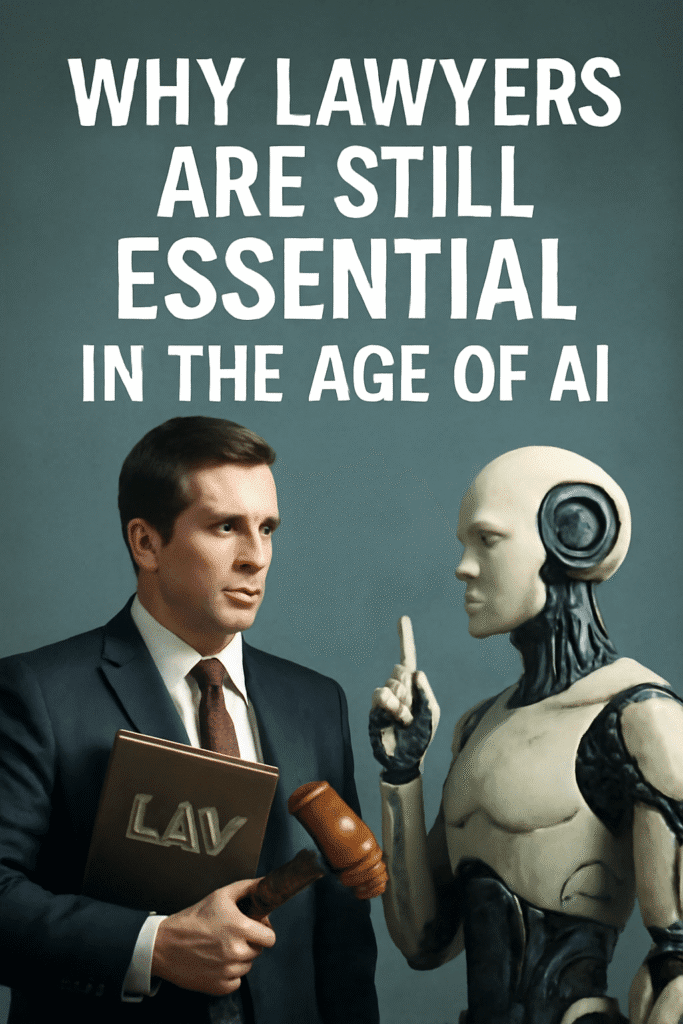
Why Lawyers Are Still Essential in the Age of AI

Artificial intelligence is undoubtedly transforming the legal profession by automating routine tasks and improving efficiency. However, the core of legal practice—human judgment, ethics, advocacy, and personalized client service—remains firmly in the hands of lawyers. Rather than replacing them, AI serves as a powerful tool that enhances lawyers’ capabilities, allowing them to focus on the aspects of law that require distinctly human skills. As the legal landscape evolves, the partnership between AI and lawyers will be key to delivering justice effectively and ethically.